Sunday, July 12, 2015

Knowledge of Arabic Is Not Sufficient to do Tafsir of Quran- Imam Nawawi

Knowledge of Arabic Is Not Sufficient to do Tafsir of Quran 

One of the greatest Hadith masters and Faqih, Imam Nawawi ra said:

"It is not sufficient to simply know Arabic. Rather, one must also know all that qualified scholars of Tafsir  have said about [a given passage of the Quran], for they may have consensus that the apparent [meaning of a verse, for example,] is something to be disregarded and that what is intended is a specific or implied meaning, or something else contrary to the obvious. Likewise, if a phrase has different meanings and it is known that one of those meanings is intended, one then explicates each occurrence [of the phrase] that comes [separately].

All of the foregoing [depicts] the offering of Tafsir by way of [uninformed] opinion, and this is unlawful.

And God knows best."

Source: Etiquette With the Quran, p99. 

Saturday, June 27, 2015

THE CONCEPT OF MODERATION IN ISLAM

THE CONCEPT OF MODERATION IN ISLAM 

Today, the word ‘moderation’ has become very common, and is used by people for many things. Sometimes, it is used for that which is good, and at times, it is used for that which is bad. For example, you may hear a doctor saying to a patient, ‘If you are to consume intoxicants, then do so in moderation’. You may also listen to one saying to another, ‘You should not smoke. However, if you wish to do so, then smoke in moderation’. What is strange in both these statements (which we often hear) is that though these vices are harmful and destructive to one’s health, yet, the word moderation is used to imply something that is good (which in reality is not so). 

In contrast to this, we have many instances where the word (moderation) is used in the correct places and brings about a good message. For example, we often hear that one must be moderate in eating, sleeping, exercising and even working. There are many other examples which show that the usage of the word moderation brings about a good meaning and message. 

With this brief explanation, the question that comes to mind is, how does Islam view the concept of moderation? Is it accommodated in Islam? And if it is accepted, then the question which needs answering is- What does ‘being moderate’ means in Islam? 

To get a clear understanding of this, we must first know that moderation basically means ‘to avoid the extreme’. So, when one keeps away from going to the extreme, then it will be said that he has adopted moderation. Extreme here, means the act of going beyond the normal or acceptable limit. It brings about an action which is done in a manner that one departs from the usual and traditional teachings. 

Based on this understanding, it will be clearly seen that Islam is in favour of moderation. It does not only accept it, but it encourages its followers to adopt the moderate path. While doing so, it discourages, and at times, prohibits one from going to the extreme, in words, thoughts or actions. Even while speaking about the Ummah (nation) of the Muslims in the Holy Quran, Allah says, ‘And thus We have made you a moderate Ummah (nation), so that you should be witnesses over the people, and the Messenger a witness over you’. (Surah Al Baqarah verse 143) 

Here, the Muslim Ummah has been characterized with the quality of being ‘moderate’ or justly balanced. By highlighting this outstanding distinction of the Muslim nation, it means that the followers of Islam must strive to adopt the path of ‘moderation’, so that this quality can always be seen in them. But what does it mean to be moderate? Does it mean that one can go against the teachings of the Holy Quran (which he finds too difficult) and say that he is being moderate? Does it mean that one can go against the teachings of the Holy Prophet (SA) (thinking that these are outdated) and say that he is being a moderate Muslim? 

No! Obviously not! In fact, no sensible, true and sincere Muslim would think of adopting such methods in trying to be moderate. Moderation does not mean to go against the teachings of Islam in the name of Modernism. It also does not mean to give a new interpretation to the laws of Islam in order to satisfy one’s desires. It does not mean to practice Islam conveniently, and leave it out when one thinks that it does not suit his time and place. 

Instead, moderation means to follow all the teachings of Islam, and to practice them in accordance to the way it was given, without going beyond the limits which have been set by Allah and His Messenger (SA). A Muslim believes that Islam is complete and perfect in all its teachings. The laws given in the Holy Quran are exactly what Allah wanted for the believers. In a similar manner, the teachings of the Holy Prophet (SA) are in accordance to what has been endorsed by Allah and made as part of the teachings of Islam. It is in this regard, Allah has ordered all Muslims to obey and follow the Prophet (SA). 

The completion and perfection of Islam means that whatever constitutes its teaching is exactly what a Muslim is required to do, as part of his duty to Allah. Violation of these laws and teachings amount to sins and transgression, and does not amount to ‘moderation’. Hence, with respect to the laws of Salaah, Fasting, Zakaat and Hajj, one must obey these as they have been given without compromise. Similarly, with respect to the laws of dress and social interaction which tell a Muslim about hijab and purdah, and the avoidance of intermingling of the sexes, are teachings which must be followed, since they have been clearly given in the Holy Quran and the Sunnah of the Prophet (SA). Violation of these (teachings) under the guise of ‘moderation’ is nothing but folly. 

In this way, a Muslim is required to be fully obedient to Allah and His Messenger (SA), and must abstain from disobedience. About this Allah says, ‘O you who believe! Obey Allah and His Messenger, and turn not away from Him while you are hearing. And be not like those who say, ‘We have heard’, but they hear not. Verily, the worst living creatures in the sight of Allah are the deaf and the dumb, who understand not’. (Surah Al Anfaal (8) verse 20) 

Like this, there are countless verses in which Muslims are repeatedly commanded to obey Allah and His Messenger, and have been strictly prohibited from disobedience to them. It is imperative that we understand that the commandments of Allah and the teachings of the Prophet (SA) are not only connected to our ritual acts of worship and purification. But, they are also connected to every aspect of our lives. In matters regarding marriage, divorce, custody of children, maintenance, birth, death, commerce and labour – Islam has given comprehensive teachings. In a similar manner, sufficient teachings have been given with respect to the manner of our speech, conduct, dress, interaction with others, treatment to family members and relatives, kindness to neighbours and strangers and helping the poor and needy. These teachings have been given to us so that we may have a complete and perfect way of life. 

Each Muslim is required to accept these teachings whole-heartedly, without any reservation or hesitance. Allah commands the Muslims in the Holy Quran by saying, ‘O you who believe! Enter into Islam whole heartedly, and follow not the footsteps of satan. Verily, he is to you an open enemy’. (Surah Al Baqarah verse 208) 

In this verse, all Muslims have been ordered by Allah to enter Islam completely. They have been strictly prohibited from following the promptings of satan, since he is the one who incites a Muslim to compromise and ‘leave-out’ the teachings of Islam. While explaining this verse of the Holy Quran, the commentators have stated, ‘No Muslim shall be deserving of calling himself a Muslim, unless he accepts all Islamic injunctions truly and sincerely, from the deep recesses of his heart, irrespective of the department of life they belong to, irrespective of whether they concern the outward physique of the body or the heart and the mind. 

This verse holds a stern warning to those who have got Islam all tied up with Masjid (Mosque) and Ibadah (the performance of acts of prescribed prayer), while they neglect injunctions relating to social life, business and personal dealings, as if they were no part of Islam’. (Ma’ariful Quran vol.1 pg. 516) 

The gist of the above verse (and its explanation) is that every Muslim is required to turn to Islam whole-heartedly, with full submission and compliance. There should not be an iota of doubt or wavering in the heart of any believer regarding the truth, soundness and authenticity of all the teachings of Islam which have reached him through the process of continuous transmission from the time of the Prophet (SA) until today. There must be total acceptance, and the sincere willingness to adhere to these teachings. There is no room for compromise, non-acceptance, uncertainty or challenge in this regard. 

As for moderation in Islam, this simply means that one must not be extreme in the teachings which Allah has given in Islam. He must not go beyond that which he is required to do, causing harm to himself and others. As for that which a Muslim must do, then he/she must do it, since it is a requirement in Islam. For example, in the Holy Quran, Allah has exhorted and encouraged the believers to spend their wealth in His cause. At the same time, one should not give away all his wealth to the extent that he does not have anything to live on. This however, does not mean that one becomes a miser or a stingy person. While establishing the perfect balance of moderation in this respect, Allah revealed the following verse, ‘And let not your hand be tied (like a miser) to your neck, nor stretch it forth to its utmost reach (like a spendthrift), so that you become blameworthy and in severe poverty’. (Surah Al Isra (17) verse 29) 

This is a wonderful verse that explains the concept of moderation in Islam. It tells us that although Allah wants a person to spend in His cause, He does not want him to spend everything to the extent that he falls in poverty. Similarly, He does not want a person to become stingy by not spending at all. So, the moderate way is to spend some (wealth) in good causes, and keep some for one’s needs and necessities. Allah does not want a person to go to the extreme of spending everything, nor does He want a person to go to the opposite extreme of keeping everything (on account of stinginess). 

Similar to this, is the case of the companion of the Prophet (SA), Sa’ad bin Abi Waqqas (RA). When he was about to die, he wanted to give all his money in charity for the sake of Allah. However, the Prophet (SA) stopped him from doing so, and requested him to give some of it in charity while leaving some in inheritance for his family members. On this occasion, the Prophet (SA) said to him, ‘It is better that you leave your family members in sufficiency than you leave them in want, begging from others’. (Bukhari) 

Here, the Prophet (SA) taught him the middle course, or moderation, so that he will be well-balanced in his spending. On one hand, he should not spend everything in charity while depriving his family members, and on the other hand, he should not give everything to his family members while depriving himself from the blessings of charity. Giving some here, and some there, was the ideal way. It is safe from the two extremes, and this is moderation. 

In this way, there are many other examples which can be quoted from the Holy Quran and the Sunnah of the Prophet (SA) to show how the teaching of moderation was implemented and practiced. Therefore, the moderation which some Muslims seek has already been given in Islam. In fact, the beautiful teachings of Islam have already incorporated the aspect of moderation, and so, there is no need to look outside the teachings of Islam for moderation. 

Whatever is out of Islam is indeed ‘out of Islam’, and hence, practicing upon it would not amount to practicing Islam. Instead, it will be considered as practicing on one’s opinions, carnal desires and fancies. Islam is one way of life; it is the religion of Allah, and therefore it will never be adulterated and adjusted to suit the likings of people. 
www.darululoomtt.net/the-concept-of-moderation-in-islam/

Friday, June 26, 2015

What is a Maxi Dress?

what is a maxi dress


Maxi Dress Definition


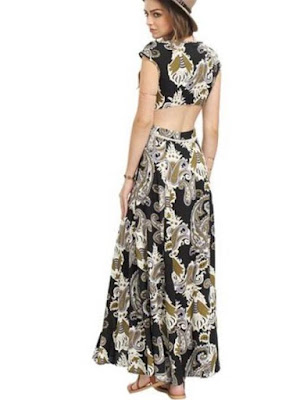
Maxi dresses are long gowns that hit somewhere from the ankles to the floor. In the past, maxi dresses were treated as informal attire. This notion has changed over the years to make maxis the most adored formal outfits. Modern styles are mostly fitted at the waist and flowy at the hem.

In recent years, fashion designers have used soft feminine materials to accommodate long gowns into catwalks around the world. The creation of different styles of maxi dresses has made it possible for women to wear them anywhere from the beach to parties and so forth. Popular trends include halter-neck, floral, sleeveless and backless.

How Should a Maxi Dress Fit?


A maxi dress or skirt should feel comfortable and look good from your own perspective. But you should also receive complements from your peers when you wear it. In order to look elegant in a long gown, you must choose the best size and style. Secondly, you must know how to style and accessorize it.

Proper length is a must. Here are points to ponder:
  • Dragging your hem on the floor will make it wear out faster
  • If it falls way above your ankle, it is not a maxi
  • A pencil style that is too long will make it harder to walk and can also make you fall
  • If it’s too long for your flats, style it with wedges or heels
  • Avoid shoes that cover the uppers of your feet
Maxi Dress


Who Can Wear a Maxi Dress?


Every woman or girl can wear a Maxi dress. There are many ways of styling a maxi to suit any body type for a variety of events. You can take it to the beach, and still style it for a wedding or work. Nowadays, some women even wear it as maternity attire.

Different colors of maxis create dissimilar looks and require custom pairing. Most women choose solids as they go with any color shoes. They also make you appear taller, just like a skirt suit.

Colorful and printed maxi dresses and skirts look super cute in warm weather. Floral prints are probably the most popular summer styles. Stripes are flattering as well. However, you should take care with striped clothes as they can create a look that you don’t intend.

Can Short People Wear Maxi Dresses?


Most dressmakers design clothes for the average body size. They seem to forget shorter ladies. Although you can still find petite maxi dresses, here are some points you need to consider:
  • When shopping online, opt for stores that have petite sections. The clothes fit better than those adjusted later
  • Look for a good tailor in your area. Occasionally, you may find a dress or other outfit that is too good to reject, but your size is not available. Adjusting a hem is always a good investment.
  • Some dresses are easily adjusted simply by using a belt
  • Consider wearing heels. If they are too much for you, opt for wedges
  • Outfits in horizontal stripes make you look taller

Why a Maxi Dress?


Due to its light-weight nature, a maxi outfit is incredibly versatile. You can dress it down for the summer, or hide layers underneath for the winter. For ladies with flawed legs, long dresses are forgiving.

You can wear it casually with flip flops or be stylish in heels. You can also choose a sheer style for the beach or pool, or opaque for a formal occasion. With the best choices, you can wear a maxi dress for virtually any event. Though these fashion staples seem to look better on some ladies, designers say there is a maxi dress for any body type.

Maxi Dress Styles


Maxi dresses come in a variety of styles. Not all styles will fit all accessions. While some are appropriate for work or formal events, others will be suitable only for a casual day or beach wear.

  • Halter Neck
  • Backless
  • Sheer
  • Strapless
  • Sleeveless
  • Long Sleeve
  • Short Sleeve

A comfy and stylish outfit is a must for every woman. To most women, a flowy and modest outfit is a huge asset. Due to their versatility and femininity, Maxi Dresses are some of the most admired and fashionable items of clothing in many areas around the world.

You May Also Like:
Types of Maxi Dresses (With Pictures)

Discover the different types of maxi dresses, from the very basic and popular casual gowns, to the most sophisticated styles for formal occasions. Also see maxi dress pictures of the various styles
How to Wear a Maxi Dress Casually

Get style advice and fashion tricks on the best way to wear your casual maxi dress, from selecting the best casual maxi dress to how to accessorize it


Sunday, May 17, 2015

How to Wear a Backless Dress With a Normal Bra

How to wear a Backless dress with a normal bra

Can You Wear a Backless Dress with a Normal Bra?


Although it is difficult to wear a backless dress with a normal bra, women with big busts find it difficult to wear most bras that go with backless dresses. This is because most of these bras cover the chest but do not offer enough support. This leads to the need of somehow pairing backless dresses with a bra that offers support.

There are some ways of getting around the issue. Some of them are discussed below:

Use a Low Back Bra Converter


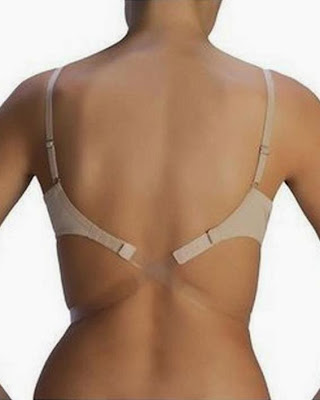
A Bra Converter like the one pictured is an invisible band that hooks to the clasps of an ordinary back closure bra and then fastens near the belly button. It makes the band plunge lower and hence keeps it from view. The low back bra converter is different to a bra extender which only bridges the gap between the clasps of a shorter bra band.
Adjustable low back bra converter strap


This converter will not work with dresses which have a deep low back. It’s also not convenient to wear it with a skin-tight dress because its outline will be visible around the belly. This problem can be solved by wearing a wide belt. A normal strapless bra will be difficult to clasp due to the pulling down effect.
Some open back dresses will have an opening that does not extend high enough for the bra band to show. Such dresses are wearable with normal bras without any worry. Buy your correct size dress and take the mirror test to ensure that the band is actually hidden.

Wear an Invisible Band Bra


Some bras that hook or zip at the front have a back band that is not easily visible. The band may be horizontal or criss-cross. Though this option may not be practical to all women, it may still be helpful to some.

Some Clear Back Bras hook at the side. In this case, the adjustment is also done on the side. This ensures that the hooks will not be visible when wearing an open back dress.

Invisible band bra for backless dress

Select a Dress that Opens above or Below the Bra Band


There are many varieties of backless dresses that can go well with a normal bra. They open in such a way that they will not show your bra band. A dress like the one pictured below is perfectly compatible with a regular bra.

Backless dress for a normal bra

Wear a Bra That Corresponds to Style of Dress


This entails choosing a dress in a style such as Halter Neck and pairing it with a Low Back Halter Neck Bra. It’s a difficult choice. However, it may be a good option for busty women who will find it difficult to find a comfortable adhesive bra.

Another way of wearing a backless dress is pairing it with a Cute Sports Bra. The bra will show, but if you choose a pretty bra, you will be proud that it is actually showing. Whenever you are showcasing your bra under a backless dress, be careful with the color combination.

How do you wear your backless dress with a normal bra? Tell us in the comment section.
You May Also Like:

How to Wear a Backless Dress Without a Bra

Want to wear a backless dress but hate adhesive bras? Discover different ways of wearing a backless dress without a bra and still get the support and coverage you need
How to Tape Breasts for a Backless Dress

Get tips on how to tape breasts for your backless, low cut and strapless dresses, various methods of taping, precautions, best tapes to use, pros and cons and much more


Tips on How to Wear a Backless Dress

Learn how to properly style a backless dress for a sexy and cute look that will make you stand out from the crowd. Also, discover how to deal with the challenges of wearing a backless dress

Sunday, April 12, 2015

Compromising in Fiqh issues for the sake of Unity: Sh. Munajjid

Compromising in Fiqh issues for the sake of Unity:

We advise our brothers to reconcile and strive to unite and put an end to discord and disunity, and do away with selfishness. They should adhere to the Deen which is one of the causes of unity and harmony; how can they make it a means of dispute and disunity? 

We have an example in ‘Abd-Allaah ibn Mas’ood (may Allaah be pleased with him), who criticized ‘Uthmaan (may Allaah be pleased with him) for offering the prayer in full in Mina, but despite that he also offered the prayer in full. When he was asked about that he said: “Disunity is evil.” Narrated by Abu Dawood (1960). 

Another indication of the importance of striving to reconcile people and bring them together is that a number of scholars stated that it is permissible for the imam to omit some of the sunnahs in order to unite the congregation, as Shaykh al-Islam Ibn Taymiyah (may Allaah have mercy on him) said: If the imam thinks that something is mustahabb, but the people praying behind him do not regard it as mustahabb, and he omits it for the sake of unity and harmony, that is better. An example of that is Witr, concerning which the scholars have three views: (1) that it can only be done with three continuous rak’ahs, like Maghrib, as is the view of the people of Iraq; (2) that it can only be done with one rak’ah separate from those that precede it, as is the view of those among the people of the Hijaaz who held this view; (3) that both are permissible, as is the view of al-Shaafa’i, Ahmad and others, even though they prefer that it should be done with one separate rak’ah. If the imam thinks that it should be done with one separate rak’ah, but the members of the congregation think that Witr should be prayed like Maghrib, and he concurs with them in order to bring about unity, that is better, as the Prophet (peace and blessings of Allaah be upon him) said to ‘Aa’ishah رضي الله ﺗﻌﺎﻟﯽٰ عنه  : “Were it not that your people have only recently left Jaahiliyyah behind, I would have demolished the Ka’bah and levelled it to the ground, and rebuilt it with two doors, one door for the people to enter and another door for them to exit.” So he refrained from doing that which was better in his view, so as not to alienate the people. Similarly, if a man thinks that reciting Bismillaah out loud is correct, but he leads in prayer people who hold a different view, or vice versa, and he concurs with them, that is better.  End quote from al-Fataawa al-Kubra (2/118). 

Shaikh Mohammed Salih Al Munajjid

(Extract from http://islam qa.info /en/87847)

Saturday, February 14, 2015

Hadiths on requesting others for Dua:

 `Umar (May Allah be pleased with him) said: "I heard Messenger of Allah (peace be upon him) saying, `The best one of the next generation (At-Tabi`un) is a man called Owais, he will have a mother and he will be suffering from leucoderma. Go to him and ask him to pray for forgiveness for you".
[Sahih Muslim].

`Umar bin Al-Khattab (May Allah be pleased with him) reported: I sought permission of the Prophet  (peace be upon him) to perform `Umrah. He granted me leave and said, "Dear brother! Do not forget us in your supplications". (`Umar added): This is something I would not exchange for the whole world.
Another narration is: He (PBUH) said, "Include us, my dear brother, in your supplications.'' (Abu Dawud and At-Tirmidhi, who categorized the Hadith as Hasan Sahih.)

Are Muslims more violent? Research says no.

    This study obliterates the myth that Muslims are more violent
Updated by  on January 30, 2015, 12:10 p.m. ET @zackbeauchamp zack@vox.com

Whenever the subject of Islamist terrorism comes up, the national conversation almost always circles back to a somewhat bigoted question: are Muslims more violent than other kinds of people because of their religion?
What these conversations usually lack is data; that is, evidence that Muslim societies are actually more violent than other ones. And it turns out, according to UC-Berkeley Professor M. Steven Fish, that judging by murder rates, people in Muslim-majority countries actually tend to be significantly less violent (bolding is mine):
Predominantly, Muslim countries average 2.4 murders per annum per 100,000 people, compared to 7.5 in non-Muslim countries. The percentage of the society that is made up of Muslims is an extraordinarily good predictor of a country's murder rate. More authoritarianism in Muslim countries does not account for the difference. I have found that controlling for political regime in statistical analysis does not change the findings. More Muslims, less homicide.
Fish further fleshed out these findings, for example by re-running the numbers to exclude non-Muslim-majority states with extraordinarily high murder rates (Colombia, El Salvador, Guatemala, Honduras, Jamaica, Lesotho, South Africa, and Venezuela). Countries with lots of Muslims were still less murder prone by a pretty large margin. You can read more details on Fish's findings in his book, titled Are Muslims Distinctive?
If Islam itself were in fact the key cause of Islamist terrorism, you'd expect ordinary Muslims to be more violent than ordinary non-Muslims. There are over a billion believing Muslims globally; if their religion were intrinsically prone to violence, the data would bear that out. In fact, it does nothing of the sort.
Still, there's no denying that Islamist extremist terrorism is a real phenomenon and real problem the rightly receives widespread study. (Fish offers his own argument, that Islamist terrorism is best understood as a reaction to Western foreign policy, but his case is exceedingly unpersuasive.)
That's not to say you can absolve the West completely. Foreign invasions of Muslim countries clearly played a role in fueling the growth of violent Islamist movements. The US-led invasion of Iraq, for example, created widespread chaos and violence, and that chaos and violence gave way to extremism. But the West is only one among a variety of factors at play in the broader 20th and 21st-century trend of Islamist extremism. Other factors have included the prevalence of dictatorship in the Muslim world, Sunni-Shia sectarianism, and, yes, theological doctrines developed by modern Islamists such as Muhammed ibn Abd al-Wahhab and Sayyid Qutb.
In that sense, though, Islam is like almost any other religion: its core tenets can be read both to prohibit and to justify political violence, depending on who's doing the interpreting. That doesn't mean Islam is intrinsically violent. It just means Muslims are people like everyone else. This data should be an important reminder of that distinction.

Source - http://www.vox.com/2015/1/30/7951309/islam-violence